Introduction
Choosing the right polyacrylamide (PAM) is one of the most important decisions in wastewater treatment. In real projects, incorrect selection often leads to weak floc formation, unstable sludge dewatering, and unnecessary chemical costs.
From practical experience across industrial and municipal systems, PAM is not a “plug-and-use” chemical. Its performance depends on matching the right type to actual water conditions.
This guide focuses on how PAM behaves in real applications, and how to select it correctly based on wastewater characteristics.

What Is Polyacrylamide (PAM)?
Polyacrylamide is a high molecular weight polymer widely used as a flocculant in water treatment. Its main function is to aggregate fine suspended particles into larger flocs, improving sedimentation and sludge dewatering.
In real systems, PAM performance depends on:
- Charge type
- Molecular weight
- Wastewater composition
- Dosing conditions
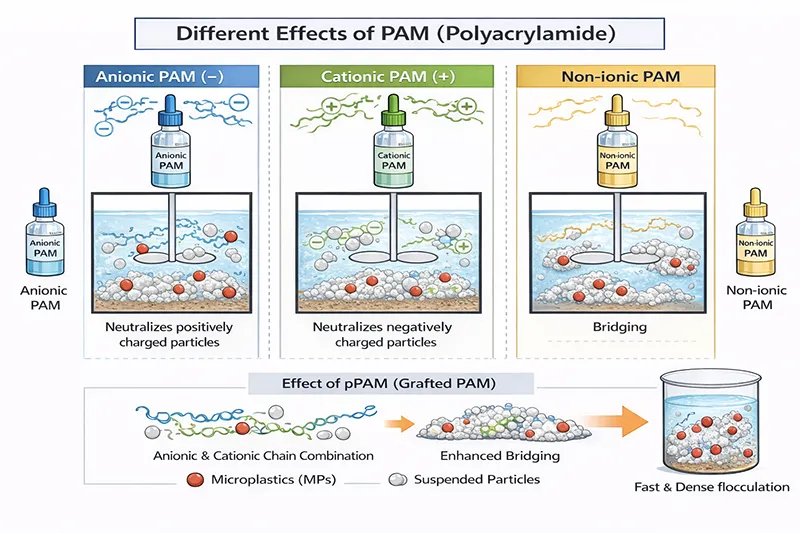
Types of Polyacrylamide (APAM, CPAM, NPAM)
There are three main types used in wastewater treatment:
- Anionic PAM (APAM)
- Cationic PAM (CPAM)
- Nonionic PAM (NPAM)
Each type works differently and should be selected based on water characteristics rather than assumptions.
Side-by-Side Comparison
| Item | APAM | CPAM | NPAM |
| Charge | Negative | Positive | Neutral |
| Best for | Inorganic solids | Organic sludge | Complex systems |
| Sludge dewatering | Low | Excellent | Moderate |
| Clarification | Excellent | Moderate | Good |
| pH tolerance | Neutral–alkaline | Acidic–neutral | Wide range |
👉 This comparison reflects field performance, not just lab data.
Applications of Different PAM Types
APAM – For Inorganic Wastewater
APAM works best when wastewater contains mineral or sand-like particles.
Typical applications:
- Sand washing
- Mining wastewater
- Construction slurry
👉 In these systems, molecular weight plays a key role.
CPAM – For Sludge Dewatering
CPAM is mainly used in sludge treatment, especially when organic content is high.
Typical applications:
- Municipal sludge
- Biological sludge
- Food and paper industry
👉 Charge matching is critical for performance.
NPAM – For Complex Conditions
NPAM is suitable when conditions are unstable.
Typical situations:
- Extreme pH
- High salinity
- Mixed wastewater
👉 It performs more consistently when charge interaction is unreliable.
How to Choose the Right PAM
In real projects, selection is based on matching chemistry with conditions.
Practical selection steps:
- Identify wastewater source
- Analyze pH and salinity
- Check sludge characteristics
- Conduct jar testing
- Adjust product and dosage
PAM vs PAC
| Item | PAM | PAC |
| Function | Flocculation | Coagulation |
| Role | Form flocs | Destabilize particles |
| Usage | After PAC | Before PAM |
👉 In most systems, both are used together.
Practical Selection Guide
| Wastewater Type | Recommended PAM |
| Inorganic solids | APAM |
| Organic sludge | CPAM |
| High salinity / unstable | NPAM |
| Municipal sludge | CPAM |
| Mining wastewater | APAM / NPAM |
👉 This guide helps reduce trial-and-error costs in real operation.
Case Example
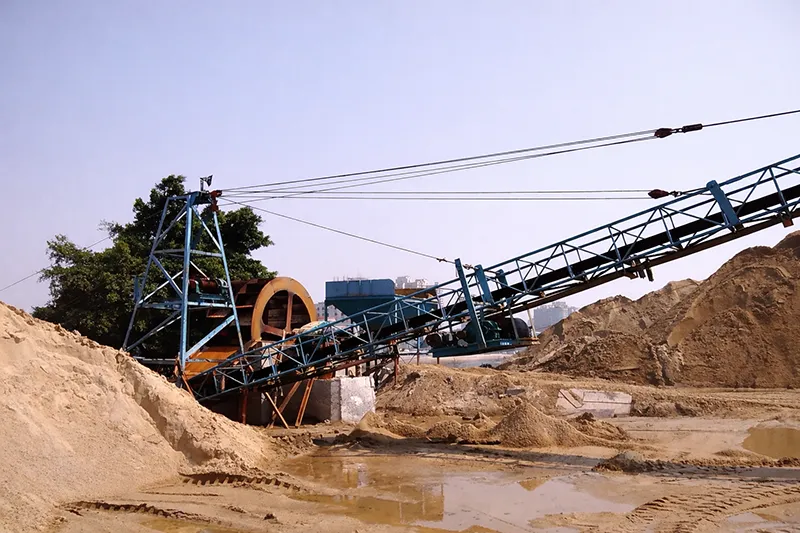
Sand Washing Project
A plant faced slow sedimentation and poor water clarity.
After testing:
- APAM was selected
- Dosage optimized
Results:
- Faster settling
- Clearer recycled water
- Stable operation
Municipal Sludge Dewatering
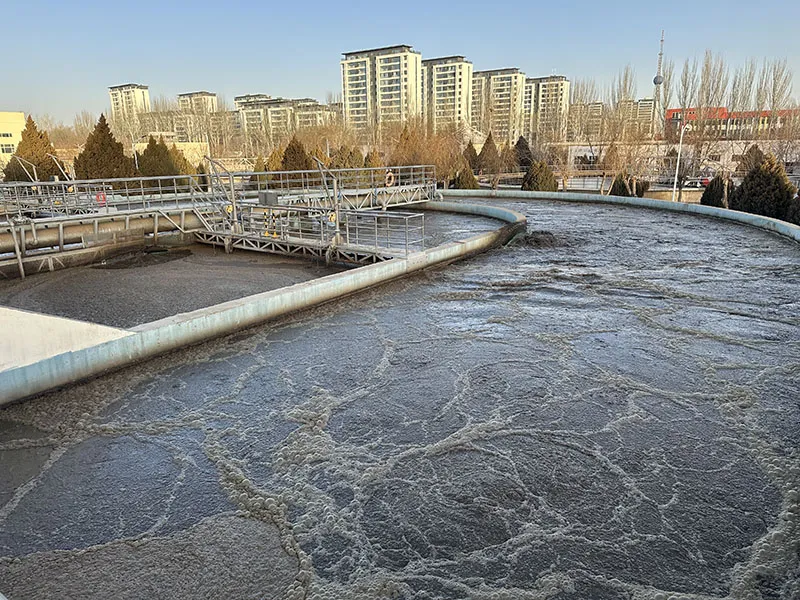
A wastewater plant had low sludge dryness.
After optimization:
- CPAM with proper charge was applied
Results:
- Improved sludge cake dryness
- Reduced disposal cost
- More stable performance
FAQ
What is the difference between APAM and CPAM?
APAM is used for inorganic particles, while CPAM is mainly used for sludge dewatering.
Can different PAM types be used together?
Yes, combined dosing is common in complex wastewater systems.
How do I choose the right PAM?
The most reliable method is jar testing combined with practical experience.
Does higher molecular weight mean better performance?
Not always. It depends on wastewater type and treatment goal.
Why does PAM performance vary?
Because wastewater composition, pH, and sludge characteristics differ.
Need Help Selecting the Right PAM?
We provide practical support based on real projects:
- Free wastewater testing
- Free product samples
- Technical selection support
- Stable product quality
- Experience across multiple industries