Introduction
In wastewater treatment, two of the most commonly used chemicals are polyaluminum chloride (PAC) and polyacrylamide (PAM). They are often used together, but their roles are completely different.
In practice, many selection issues do not come from the product itself, but from misunderstanding how these two chemicals work.
This article focuses on how PAC and PAM are actually used in real treatment systems, and how to choose the right combination based on your water conditions.

What Is PAC?
Polyaluminum chloride (PAC) is an inorganic coagulant used to destabilize suspended particles in water.
It works quickly and is commonly used at the initial stage of treatment to reduce turbidity and prepare the system for further separation.
Typical use cases include:
- Drinking water clarification
- Industrial wastewater pre-treatment
- Municipal sewage treatment
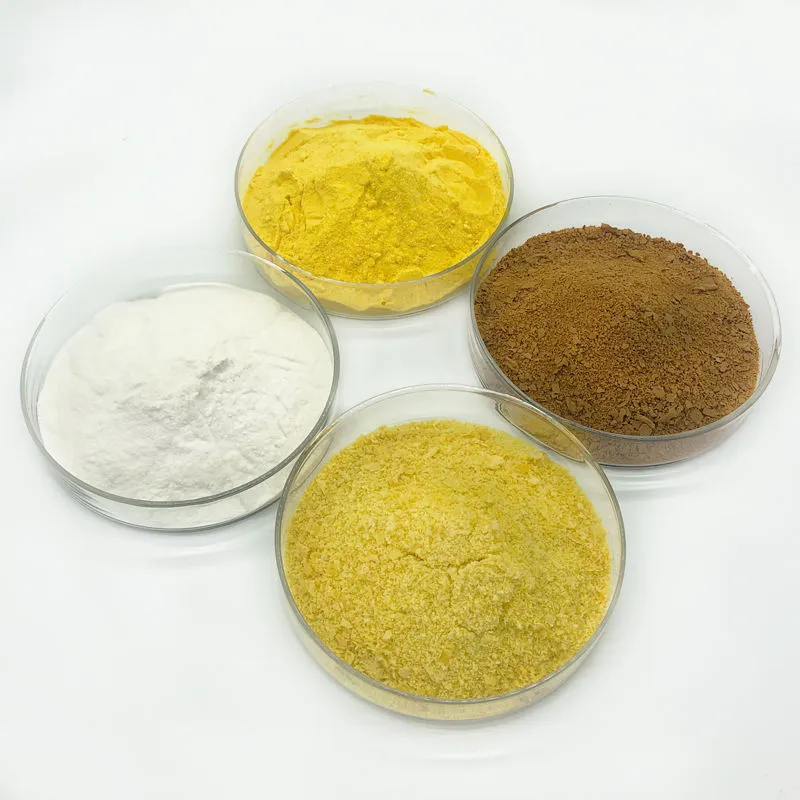
What Is PAM?
Polyacrylamide (PAM) is an organic polymer flocculant used to form larger flocs after coagulation.
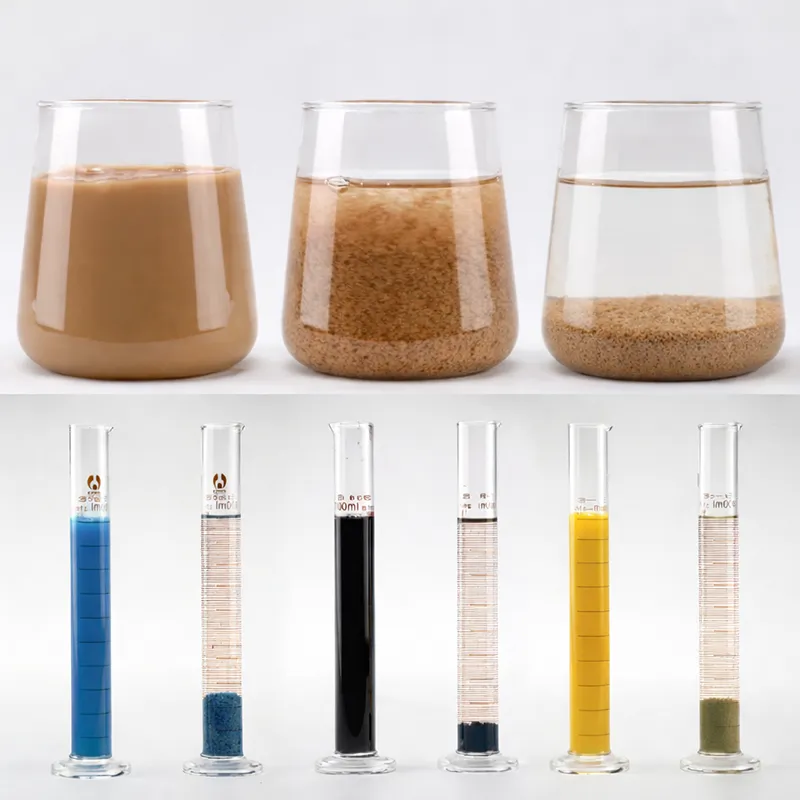
It does not replace PAC, but works after coagulation to improve settling and sludge dewatering.
Typical use cases include:
- Sludge dewatering
- Sedimentation enhancement
- Solid-liquid separation
Key Differences Between PAC and PAM
In real operation, PAC and PAM serve different roles:
| Parameter | PAC | PAM |
| Type | Inorganic coagulant | Organic polymer |
| Function | Coagulation | Flocculation |
| Stage | First | After PAC |
| Main purpose | Destabilize particles | Form larger flocs |
| Typical use | Turbidity removal | Sludge dewatering |
👉 The key point:
PAC prepares the particles, PAM makes them settle.
How PAC and PAM Work Together
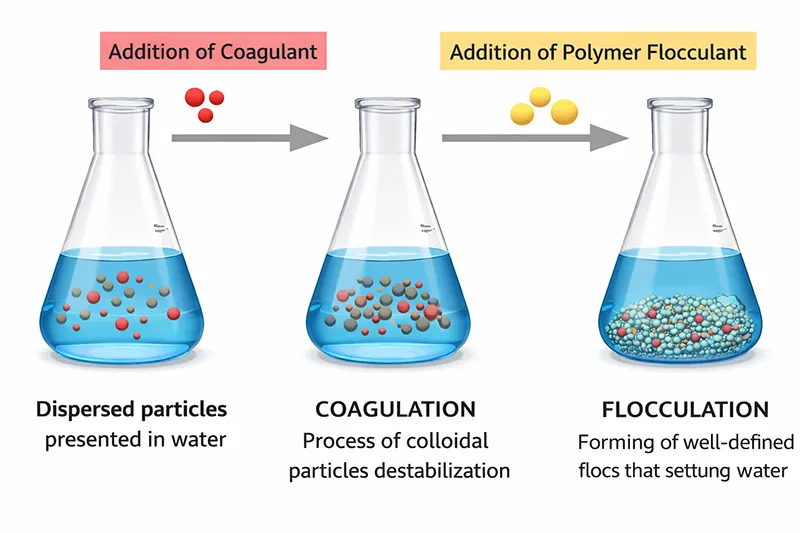
In most treatment systems, PAC and PAM are used in sequence rather than separately.
Typical process:
- PAC is added to destabilize particles
- Micro-flocs begin to form
- PAM is added to enlarge flocs
- Flocs settle or are separated
This combination improves:
- Settling speed
- Effluent clarity
- Sludge dewatering efficiency
When to Use PAC, PAM, or Both
Use PAC when:
- Water has high turbidity
- Particles are difficult to destabilize
- Pre-treatment is required
Use PAM when:
- Sludge needs to be dewatered
- Settling is slow
- Fine particles remain after coagulation
Use PAC + PAM when:
- Water quality is complex
- High efficiency is required
- Stable operation is needed
👉 In most industrial and municipal systems, combined use is the standard approach.
How to Choose Between PAM and PAC
Selection should be based on actual conditions, not assumptions.
Practical selection steps:
- Analyze water characteristics
- Identify treatment goal
- Conduct jar testing
- Adjust chemical combination
- Optimize dosage
Common mistake
- Using only PAC when floc size is insufficient
- Overdosing PAM without proper coagulation
- Skipping jar testing
These issues often lead to unstable performance.
Case Example
In a sand washing wastewater project:
- PAC alone improved turbidity but settling remained slow
- After adding anionic PAM:
- Floc size increased significantly
- Settling became faster
- Water reuse efficiency improved
This type of result is common when PAC and PAM are used together correctly.
FAQ
Which is better, PAC or PAM?
Neither is “better.” They serve different roles and are often used together.
Can PAM replace PAC?
No. PAM cannot destabilize particles effectively on its own.
Can PAC be used alone?
Yes, but performance may be limited in complex wastewater.
Do I always need both PAC and PAM?
Not always, but in most practical systems, combining them gives better results.
How do I determine dosage?
Through jar testing based on actual water conditions.
Not Sure Whether to Use PAC, PAM, or Both?
We support customers with practical solutions:
- Free water sample testing
- Free product samples
- Technical guidance for selection
- Stable product quality
- Experience across multiple industries
Contact us to find the right combination for your system.